When ‘Clever’ Isn’t Enough
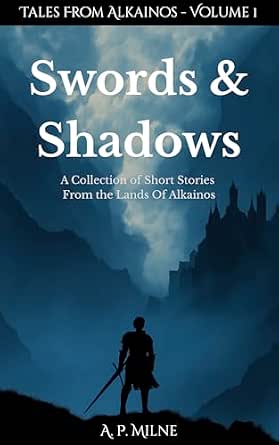
I recently went back and read some of Tales from Alkainos, the short-story collection I published while I was first trying to turn years of worldbuilding into actual fiction.
I came away with a slightly uncomfortable conclusion.
The stories weren’t obviously terrible. There were ideas in them I still liked, and plenty of material I still want to keep. But I didn’t particularly want to reread them.
That seemed more useful than looking at sales figures or trying to explain the book away as an early experiment. If I wasn’t being pulled through my own stories, something wasn’t working.
Clever but flat
A lot of the stories involved supernatural investigation: strange events, old secrets, characters trying to understand what was happening beneath the surface. I still like all of that. The problem was that too often the investigation became contemplative.
Characters found something strange, considered it, discussed what it might mean and gradually assembled an explanation. There could be danger around them, but the act of investigating was often separate from that danger.
I’ve started calling the result “clever but flat.”
It became particularly obvious while developing ideas for the first new Alkainos novel. I generated and discarded a lot of possible supernatural cases. Several had mysteries I liked. Some had interesting moral problems. A few would probably have made decent short stories or television episodes.
But they didn’t feel like novels.
The missing ingredient wasn’t a more complicated mystery. Usually the opposite was true. What they needed was pressure.
A clue is much more useful to the story if obtaining it costs something. Perhaps somebody has to take a risk to get it. Perhaps learning it exposes the investigators to somebody who now knows what they are doing. Perhaps it forces a choice, changes their destination, damages a relationship or simply makes the situation worse.
The characters can still think. I don’t want Alkainos mysteries to become simple action stories in which nobody stops to understand anything. But understanding needs to happen while the story is moving.
Building the first novel differently
That lesson has shaped the development of The Ash Cartographer, the working title for the first novel built around the Hunter, Veteran and Fixer trio.
The basic supernatural idea has survived: a cartographer has discovered a way of identifying places where the boundary between the mortal world and Eiduron is unusually weak, and is using that knowledge for increasingly dangerous attempts to reach someone he has lost.
What has changed is everything around it.
The Cartographer cannot simply sit at the centre of the mystery waiting to be understood. He has his own objective and reacts when the protagonists interfere with it. Discoveries alter what both sides do next. The supporting cast has also been cut back where interesting characters threatened to create separate stories that the novel did not need.
The plot has now developed into a working thirty-chapter structure, with the main action taking place over roughly ten days. One test I’ve been applying to each chapter is simple: something must change. Knowledge, danger, objective or relationship. Moving the characters from one town to another is not, by itself, progress.
Even the geography came afterwards. Rather than choosing a part of Alkainos I wanted to showcase and inventing a story to fit it, I waited until the story told me what it needed: an old provincial city, river transport, estates, roads and foothills, all within a relatively tight pursuit corridor. That led the novel to Aurenmark in Eidengard, with Dornbruck as its main urban anchor.
There is a lot still to prove. A thirty-chapter outline is not a good novel, and a rule written into a style guide doesn’t magically fix prose. In the last few days I’ve started testing the process on actual chapters, which has already exposed another problem: prose can satisfy an outline perfectly and still feel too chopped-up or mechanically paced on the page. So that is being worked on too.
But the larger lesson feels useful enough to keep.
I’m still interested in mysteries, hidden histories and characters trying to understand things they probably shouldn’t. I don’t want Alkainos to become simpler. But I do want that understanding to be earned while something is happening.
“Clever but flat” has therefore become one of the tests I’m applying to the new novel. If a scene exists mainly so that somebody can demonstrate that they understand the mystery, it probably isn’t doing enough. If getting that same piece of information forces a choice, exposes somebody, costs time, attracts attention or makes the situation worse, then the investigation is also moving the story.
That sounds obvious written down.
It took writing a book I didn’t particularly want to reread to properly learn it.